Environmental mitigation measures are a critical step in the hydropower licensing process, addressing facilities’ effects on fish, wildlife, water quality and other essential river functions. However, the mitigation measures required of hydropower facilities are highly varied and understanding how they are applied across projects and over time often requires extensive manual review.
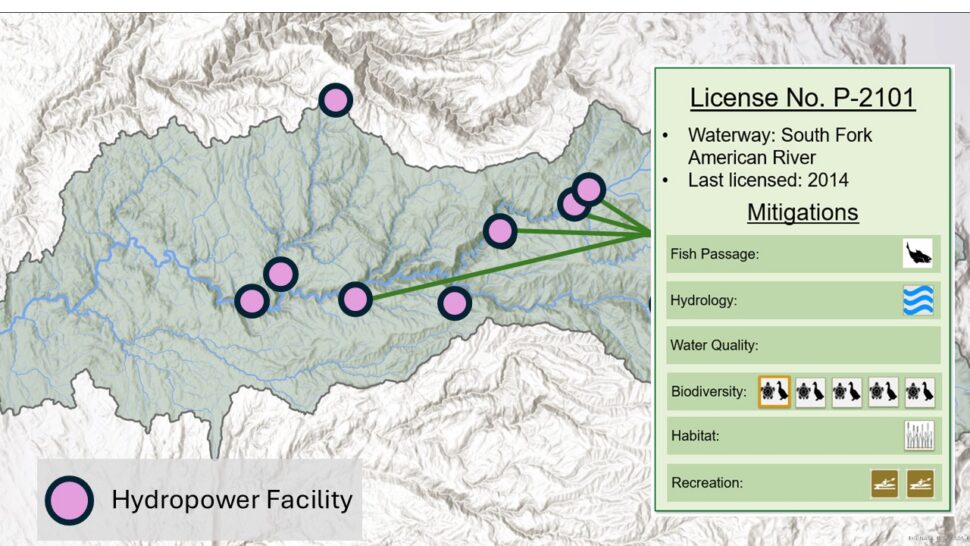
Researchers at Oak Ridge National Laboratory have developed a new database, available on HydroSource, that combines artificial intelligence and expert review to support faster, more consistent analysis of hydropower environmental mitigation requirements. The database compiles environmental mitigation measures from 461 Federal Energy Regulatory Commission (FERC) licenses issued between 1998 and 2023 and identifies 128 unique mitigation categories, enabling smarter planning and research for stakeholders such as policymakers and developers.
At the core of the effort is a novel AI-assisted document analysis workflow developed by ORNL researchers. Using natural language processing (NLP) and machine learning (ML) techniques, the system automatically scanned hydropower licensing information to identify, classify and organize mitigation measures that would otherwise require substantial manual interpretation. Subject matter experts then reviewed and refined the AI-generated results, creating a transparent, reproducible and scalable approach for extracting environmental requirements from complex regulatory documents.
This comprehensive resource builds on an earlier ORNL database released in 2013, while also demonstrating how AI can accelerate environmental data extraction and regulatory analysis workflows. It offers a resource for exploring how mitigation requirements have varied across projects, regions and time periods while introducing new information to improve utility and analytical capabilities.
What’s New
The new database significantly expands previous efforts to inventory environmental mitigation requirements, with enhancements that include:
- A decade of additional licensing information, extending the previous record from 2013 through 2023
- Associated license text for each documented mitigation, allowing users to review the original language behind each identified measure
- Counts of repeated mitigation mentions within each license, showing how often specific requirements appear
- Improved location information, supporting stronger spatial analysis of mitigation trends
- AI-assisted extraction and classification methods, that rapidly analyzed large volumes of FERC licensing documents using natural language processing
- A reproducible AI-enabled workflow to support future updates and expansion of the database as new licenses become available
Together, these additions make the database more transparent, reproducible, scalable and useful for a wide range of hydropower and environmental research applications.
Supporting More Informed Hydropower Planning and Research
The dataset provides stakeholders with a clearer view of the environmental measures required for licensed hydropower facilities across more than two decades of federal licensing decisions. The database helps hydropower developers and managers to better understand the types of mitigation measures that are often required during initial licensing or relicensing processes, while researchers and policymakers may use the data to examine spatial and temporal trends or explore relationships between mitigation requirements and environmental indicators.
This effort also highlights the growing role of AI in environmental data science. The AI-assisted workflow demonstrates how advanced language models and natural language processing tools can help transform complex regulatory documents into structured, searchable datasets that support faster scientific analysis and more informed decision-making.
Explore the new database here.